When the Dog Is the Only Member of the Family Who Wants to Go Outside
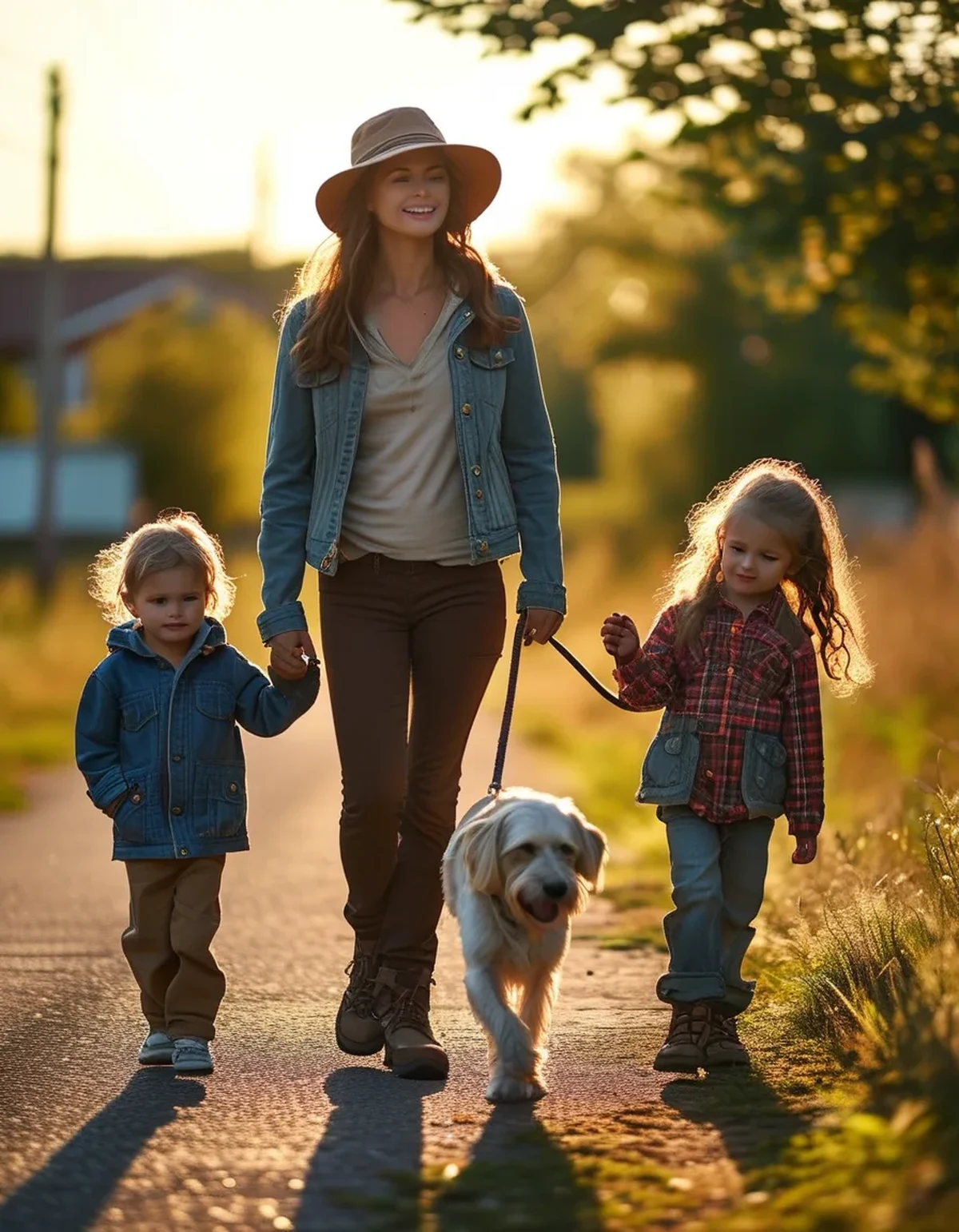
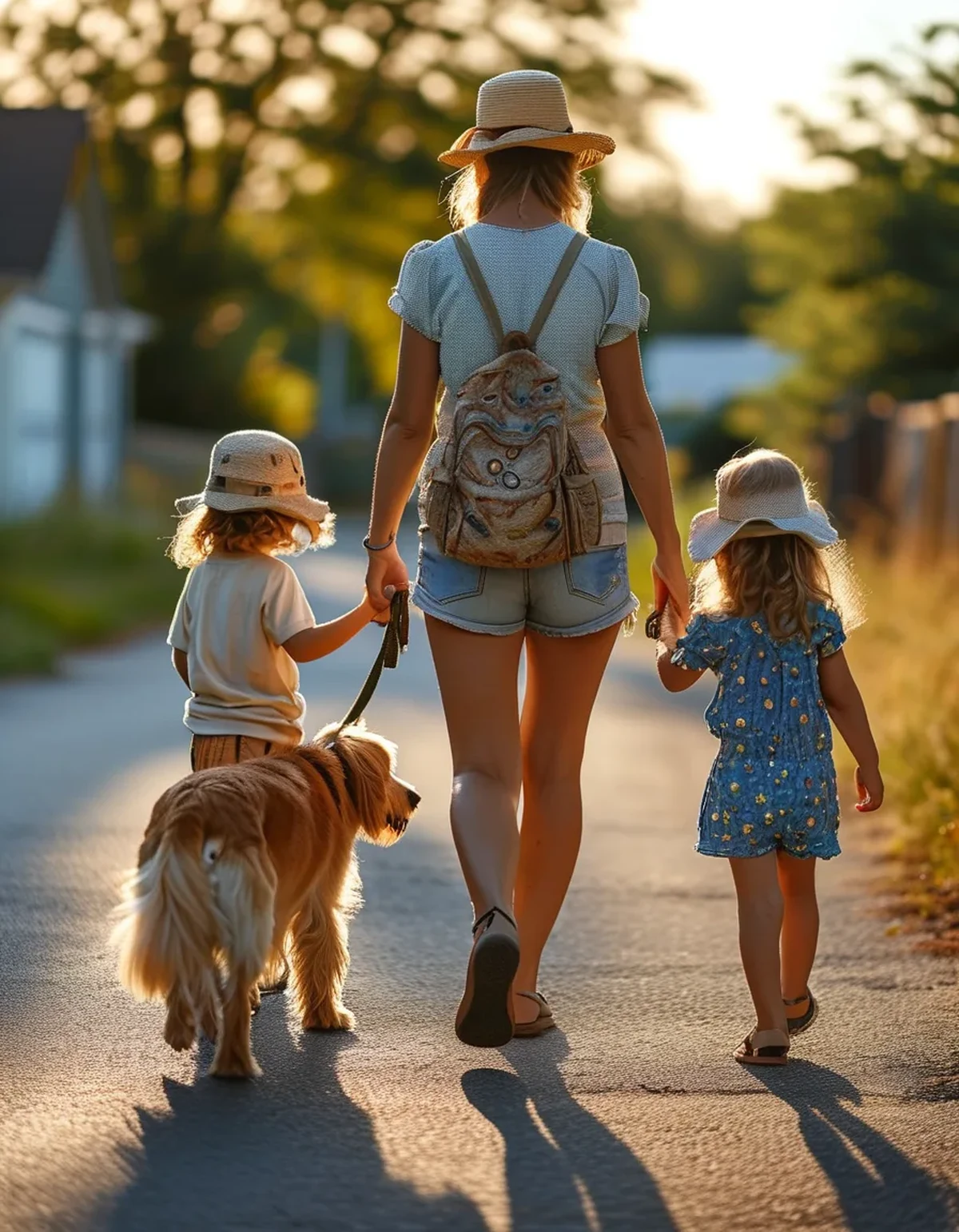
Quick Answer: The dog is the most reliable family movement trigger you have, because the walk is non-negotiable and does not have to be argued for as exercise. Use it by making the walk a task rather than an activity - someone holds the lead, someone chooses the route, someone is responsible for a destination - and by keeping it short enough that nobody negotiates. Fifteen minutes with a job to do beats an hour that requires persuasion, and it happens every single day whether anyone is enthusiastic or not.
The family walk has to be sold. The dog walk does not.
That difference is worth more than any amount of motivational strategy, and most households are sitting on it without using it.
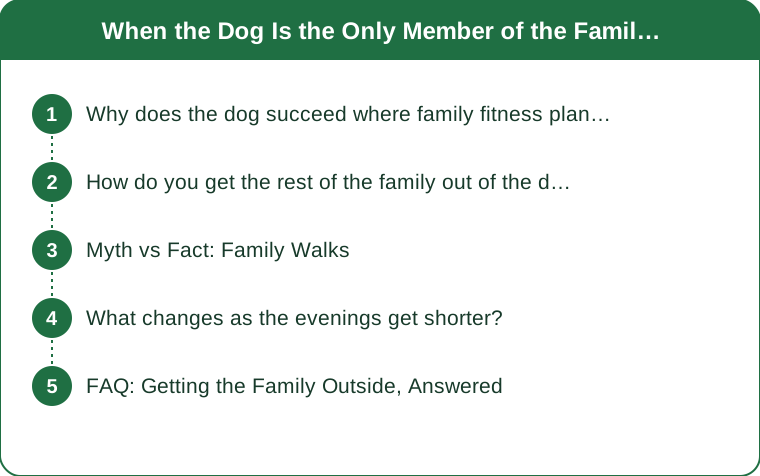
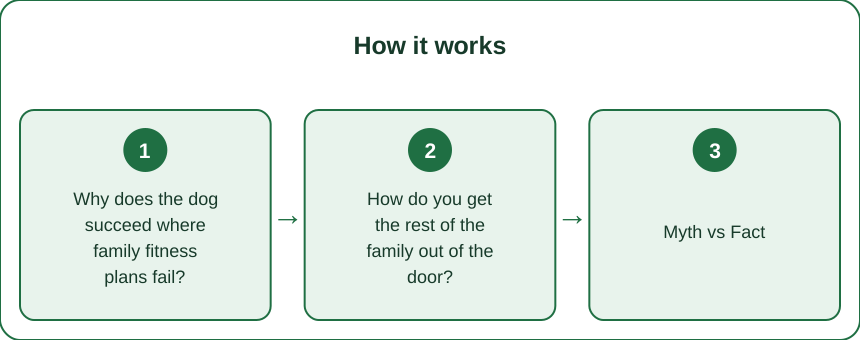
Why does the dog succeed where family fitness plans fail?
It is not framed as exercise, so nobody negotiates it. The moment movement is presented as a health activity, it enters the category of things that can be argued about. A dog needing a walk is a fact about the household, and facts get less resistance than proposals.
It has a built-in non-negotiable schedule. Family fitness plans die because they depend on everyone being available and willing at the same time. The dog does not care about availability, which is precisely the feature.
There is a job attached, and jobs are easier than activities. Holding the lead, carrying the bags, choosing the route - a role gives a reluctant teenager a reason to be there that is not about their fitness.
It is short by default. Nobody has to commit to an hour, which is the commitment most family plans ask for and most families cannot deliver on a Tuesday.
It repeats daily, which is where the actual benefit is. Ten to twenty minutes a day, every day, adds up far more than the ambitious weekend plan that happens twice in September and then not again.
And it is genuinely low-stakes. Nobody is bad at walking a dog, which removes the competence anxiety that keeps some family members out of anything framed as a workout.
How do you get the rest of the family out of the door?
Give each person a specific role, not an invitation. One holds the lead, one navigates, one is in charge of the treat pouch. Roles are much harder to decline than invitations because declining leaves a job undone.
Let someone else choose the route, including bad routes. Handing route choice to a nine-year-old produces a strange, inefficient walk and dramatically increases the chance they come again. Efficiency was never the point.
Attach a destination that is not the walk. The postbox, the shop for one item, a friend’s house to drop something off. A purpose beyond exercise converts the walk into an errand, which is a much easier sell.
Keep the first version genuinely short. Fifteen minutes. The most common mistake is making the first family walk long enough to confirm everyone’s suspicion that it will be tedious.
Do not talk about it as exercise, at all. Framing it as movement, steps, or health reliably reduces participation among exactly the family members you are trying to include.
Use the timing you already have. After dinner, before homework, or on the way back from a pickup. A new time slot needs defending; an existing one does not.
And let people bring their phone. The battle over screens is a separate battle. Winning the walk and losing the phone argument is a much better outcome than losing both.
Myth vs Fact: Family Walks
Myth: It only counts if everyone comes. Fact: one parent and one child walking the dog four times a week is a genuine result. Waiting for full attendance is how the whole thing stops happening.
Myth: A short walk is not worth doing. Fact: daily short walks accumulate more total movement than occasional long ones, and they build a habit that occasional efforts never do.
Myth: Teenagers will not come. Fact: many will, if there is a task, if it is short, and if it is not framed as being for their benefit. The framing is doing more damage than the teenager is.
Myth: You need good weather. Fact: the dog needs walking regardless, which is exactly why this works where weather-dependent plans do not. Waterproofs by the door solve it.
Myth: The dog gets enough exercise in the garden. Fact: for most dogs, a garden provides very little of the mental stimulation that a walk does, and the sniffing is a large part of the benefit for them.
Myth: It has to be the same time every day. Fact: consistency of occurrence matters more than consistency of timing for a family, where the calendar changes weekly anyway.
What changes as the evenings get shorter?
The after-dinner slot disappears first. Late August into September, usable evening light drops noticeably each week, and the walk that worked at 7:30pm in July does not work at 7:30pm in late September.
Move it earlier before it collapses, not after. Shifting to immediately after school or immediately before dinner in early September keeps the habit alive through the transition, rather than losing it and rebuilding in spring.
Visibility becomes a real requirement. A reflective strip on the lead, a light on the collar, and light-coloured or reflective outerwear for whoever is walking on the road side. This is a genuine safety matter once it is dark by 7pm.
Cooler weather increases participation, usually. For many families, an August walk was too hot to be appealing and a 15C September evening is considerably more pleasant. The seasonal shift is not all working against you.
Dogs shed heavily in this period, which affects clothing choices. Late summer into autumn is a major shedding season for many breeds, so darker smooth fabrics collect visibly more hair on the walk.
And routes need rethinking for darkness. A well-lit shorter loop replacing a longer unlit path is worth working out in advance rather than discovering in the dark in October.
FAQ: Getting the Family Outside, Answered
How do I get my kids to come on a family walk?
Give each of them a specific role rather than an invitation, let one of them choose the route, attach a destination that is not exercise, and keep the first version to about fifteen minutes.
How do I get a teenager to join?
Make it short, give them a task, do not frame it as being good for them, and let them bring their phone. The framing turns more teenagers away than the walking does.
Is a fifteen-minute walk actually worth it?
Yes - daily short walks accumulate more total movement across a month than occasional long ones, and they build a habit that survives a busy schedule.
What do we do when it gets dark early?
Move the walk earlier in early September before the evening slot collapses, add reflective gear and a collar light, and plan a shorter well-lit route as the winter default.
TL;DR:
- The dog walk is the one family movement slot that does not have to be argued for - it happens regardless of enthusiasm.
- Give people roles rather than invitations, and let someone else choose the route even if the route is bad.
- Attach a destination that is not exercise, and never frame it as exercise.
- Keep it to about fifteen minutes; short and daily beats long and occasional.
- Move the walk earlier in early September before the evening light disappears, and add reflective gear and a collar light.
You do not need a family fitness plan. You have a dog at the door twice a day.
Keep Reading
This article is for general informational and styling purposes only. Fit, sizing, and product availability may vary.