Family Fitness When the Evenings Get Dark Earlier
Quick Answer: Family activity almost always drops in autumn, and the cause is structural rather than motivational - the after-school window that carried the routine disappears with the daylight. The fix is to move the activity rather than defend the old slot: shift to mornings or weekends for the outdoor version, and build a genuinely short indoor default for weekday evenings. Families that try to preserve the summer routine in the dark usually lose it entirely by November.
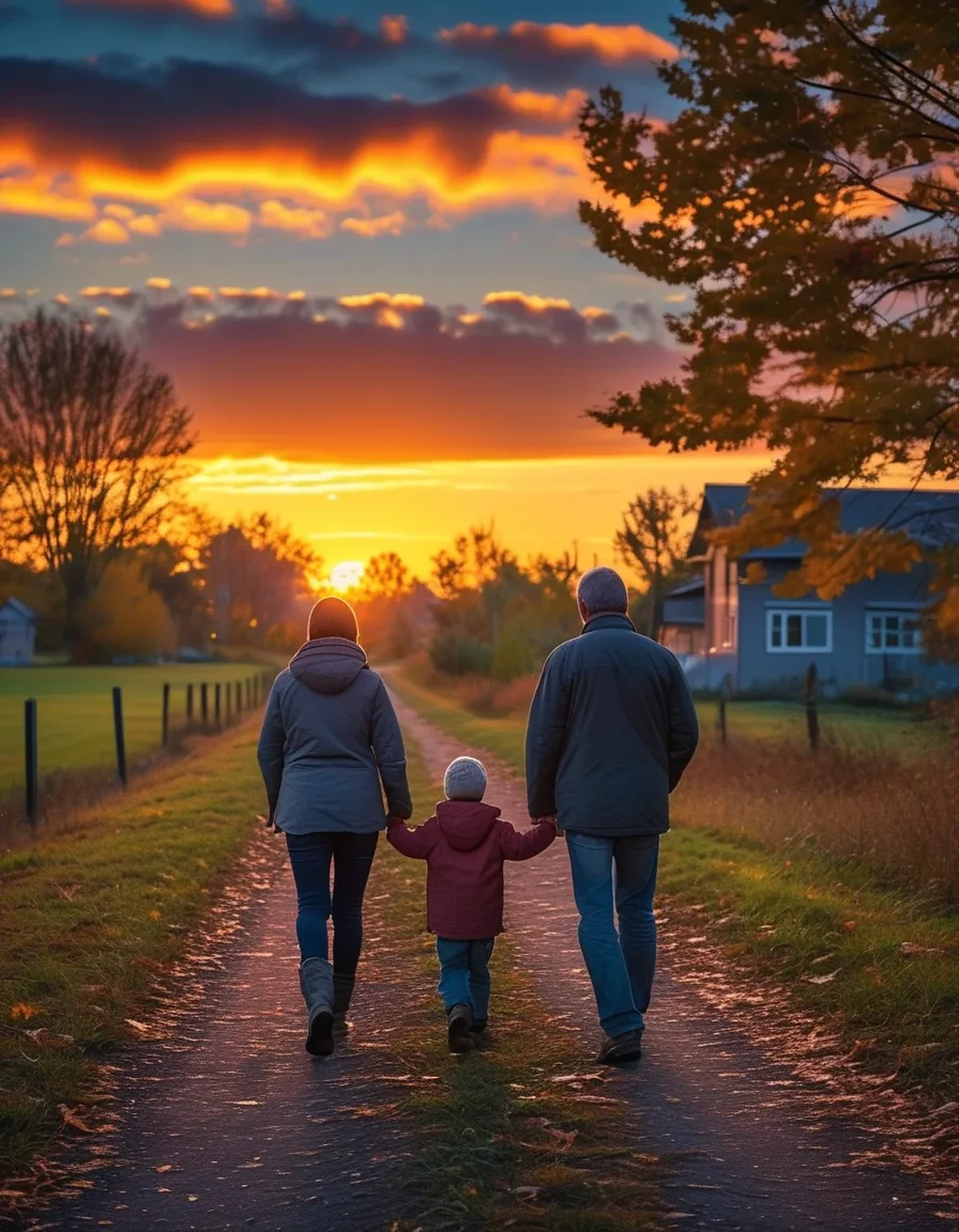
In July you were all outside until eight.
By late September it is dark at seven and the whole thing has quietly stopped.
Nothing went wrong. The slot you were using no longer exists.
Why does family activity collapse when the clocks change?
Because it was built on a window that has closed, and nothing replaced it.
The summer family routine typically runs on the after-dinner daylight hours - the park, the garden, the bike ride, the walk. That window is not a habit, it is a resource, and in autumn the resource disappears.
The specific sequence is predictable:
- Daylight after school shortens week by week, and the activity gets squeezed rather than moved
- A few sessions get skipped because it is already dark
- Skipping becomes the default within about two weeks, because nothing was scheduled in its place
Two other autumn factors stack on top. School and activity schedules restart in September, which fills evenings with things that were not there in July. And energy is genuinely lower for everyone - kids included - during the adjustment to a new term and less light.
Which is why this is not a motivation problem and should not be treated as one. The family did not become lazy in six weeks. The thing they were doing stopped being possible at the time they were doing it.
The families who keep it going are the ones who move the activity in advance rather than waiting for it to fail and then trying to restart it.
What should replace the after-school slot?
Two things, because one slot cannot carry it.
Weekend mornings become the main outdoor session. This is the honest answer for most families - the volume that used to be spread across weekday evenings gets concentrated into one or two longer weekend outings.
What makes the weekend version work:
- A fixed time, treated like any other commitment. Saturday at 10 works far better than sometime on the weekend
- A destination rather than an activity. Kids engage far better with going somewhere than with going for a walk
- Somewhere reachable in under 20 minutes, because travel time is what kills weekend plans
Weekday evenings need a much smaller indoor default. Not a workout - a ten to fifteen minute thing that happens between dinner and screens.
What works indoors with mixed ages:
- A short circuit with a timer, where the timer does the discipline rather than a parent
- Anything with music and a defined end, since defined ends prevent negotiation
- Games that are movement in disguise - balloon keepy-uppy, floor-is-lava, an obstacle route through the hallway
And the one thing that genuinely survives the dark: the evening walk with torches or head lamps. For younger children this often works better in the dark than in daylight, because darkness makes an ordinary route interesting. It is worth trying before assuming dark walks are a downgrade.
Do not try to run both a big weekday routine and a big weekend one. Pick the weekend as the main event and keep the weekday version deliberately small enough that it survives a bad day.

How do you handle the resistance that comes with it?
Expect it, make the sessions shorter than you want to, and stop negotiating the schedule.
Resistance rises in autumn for real reasons. Everyone is more tired, the days are shorter, and the new term is genuinely demanding for children. Treating autumn reluctance as the same thing as summer reluctance leads to fights that are not worth having.
Three adjustments that work:
- Halve the duration. A fifteen-minute session that happens beats a forty-minute one that turns into an argument. Volume can come back in spring
- Make the time non-negotiable and the content negotiable. Whether we move is not a question; what we do is theirs to pick. This single distinction removes most of the friction
- Go first and stop recruiting. Children copy behaviour far more reliably than they follow instruction. A parent visibly doing something and not asking is more effective than any amount of encouragement
On teenagers specifically: the family session may not survive, and that is normal rather than a failure. What tends to work at that age is a shared destination - a climbing wall, a swim, a dog walk with a purpose - rather than a family workout.
On very different ages in one household: pick activities where different levels can coexist without anyone waiting. Scootering alongside a runner, a park with equipment for one and space for another, a walk with a designated turnaround point.
And a boundary worth setting early: the routine does not depend on everyone participating every time. A routine that requires full attendance fails on the first illness or after-school commitment, and it is much harder to restart than to continue with three out of four.
5 Mistakes Families Make in the Dark Half of the Year
1. Defending the old slot. Trying to preserve the 5pm outdoor session as the light disappears means shorter and shorter sessions and then none. Move it deliberately in early September, before it fails on its own.
2. Making the winter version as ambitious as the summer one. The indoor weekday default should feel almost too easy. Fifteen minutes is the target, not the compromise - anything bigger will not survive a hard week in November.
3. Waiting for a good day to restart. Once a routine has stopped, families tend to wait for enthusiasm to return before resuming. It does not. Resume small on an ordinary bad day and the enthusiasm follows.
4. Requiring everyone to take part. A routine that only counts when the whole family is present will fail on the first clash, and the all-or-nothing framing means it does not restart. Two people is a session.
5. Treating dark as a barrier rather than a feature. Torch walks, glow sticks and after-dark scavenger hunts are genuinely more engaging for younger children than the daylight version. The dark is only a problem if you are trying to do the summer activity in it.
A sixth that quietly matters: kit by the door. In autumn the friction is finding gloves and torches, and a single box by the door removes most of the excuses for both children and adults.
FAQ: Family Fitness in Autumn Questions, Answered
How long should an indoor family session be?
Ten to fifteen minutes for weekdays. Long enough to count, short enough that nobody argues, and short enough to still happen on a difficult evening. Save longer sessions for weekends.
My kids refuse to go out once it is dark. What now?
Try torches or head lamps and a short familiar route before giving up on it - darkness makes an ordinary walk novel for younger children. If it genuinely does not land, move outdoor time to weekend mornings and keep weekdays indoors.
What about very different ages?
Choose activities where different levels can happen side by side without anyone waiting - one on a scooter and one running, or a park with space for both. Shared destination beats shared exercise once the age gap is wide.
We have already stopped. How do we restart?
Start smaller than feels worthwhile, on an ordinary weekday, without announcing a new regime. Ten minutes twice this week is a better restart than a plan for four sessions that does not survive the first clash.
Is it worth pushing when everyone is clearly tired?
Usually go shorter rather than skipping entirely - a ten-minute walk on a tired evening keeps the pattern alive and often improves the mood. Genuine illness is different, and skipping is the right call there.
TL;DR:
- Autumn family activity collapses because the after-school daylight window closes, not because motivation drops
- Move the routine in early September rather than defending a slot that is disappearing
- Weekend mornings become the main outdoor session; weekdays need a small indoor default
- Keep the weekday version to ten to fifteen minutes so it survives bad evenings
- Make the time non-negotiable and the content the children’s choice
- Two people is a session - do not require full attendance
- Torches turn dark walks into the best part of the week for younger children
The summer routine is not coming back until spring. Build the autumn one before the old one fails.
Keep Reading
This article is for general informational and styling purposes only. Fit, sizing, and product availability may vary.