Why Kids Resist the Activity They Asked For
Quick Answer: The pattern is close to universal, and the cause is usually not the activity. Four things drive it: the gap between the imagined version and the actual one, the point where beginner novelty ends and real difficulty starts, competing depletion from a new school year, and social factors that have nothing to do with the sport. The response that works is a curiosity conversation before a decision - and a rule about when quitting is allowed that you set in advance, not in the doorway.
They asked for this. They were excited about this. And now you are having the same argument three times a week.

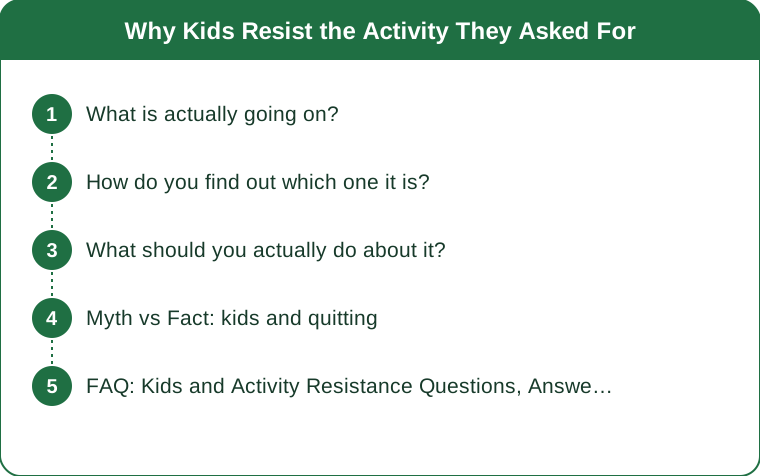
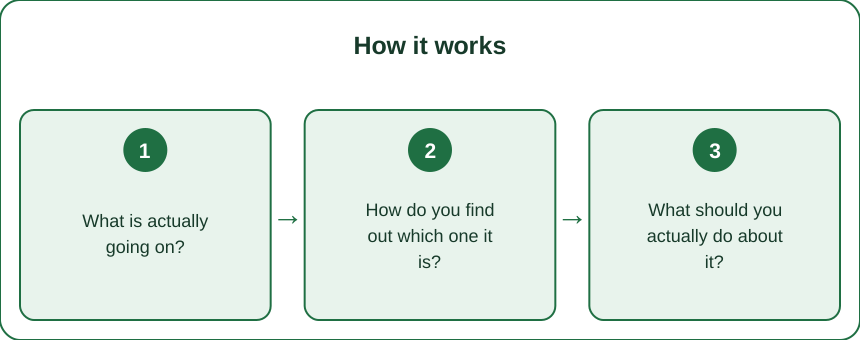
What is actually going on?
Four causes, and identifying which one you have determines everything about the response.
1. The imagined version has ended. Children choose activities based on an image - the uniform, the friend who does it, a video. The actual version involves drills, waiting, correction, and being bad at something in front of people. The gap between those two is where most early resistance lives, and it has nothing to do with whether they will eventually love it.
2. The novelty cliff arrived. Weeks one and two are all new. Around week three to five, the beginner’s rapid improvement flattens and real effort starts being required. This is the single most common quitting point across every activity.
3. Everything else got harder at the same time. A new school year is genuinely depleting - new teacher, new expectations, longer days, disrupted sleep. The activity is not the problem; it is the thing with the least social cost to refuse. School is non-negotiable, so the resistance lands on the optional thing.
4. Something social happened. A comment, a friend who left, being the only one who cannot do something yet. Children rarely volunteer this, and it is frequently the actual reason when the stated reason is vague.
Getting the cause right matters, because the correct response to a social problem is very different from the correct response to a novelty cliff.
How do you find out which one it is?
By asking well, which mostly means asking about specifics rather than feelings.
Do not ask why do you not want to go. It invites a justification, and children generate one to satisfy the question - usually it is boring, which tells you nothing.
Ask about the shape of the session instead. What is the first thing you do when you get there? What is the part that goes on longest? Who do you stand next to? Specific questions get specific answers, and the answers locate the problem.
Listen for the timing of the complaint. Resistance before leaving and contentment afterward usually means transition difficulty rather than dislike of the activity. Distress during or after is a much more serious signal and deserves proper attention.
Ask in the car, not at the door. Side-by-side conversations without eye contact produce more honest answers from children than face-to-face ones, and the doorway is the worst possible moment - you are both under time pressure.
And watch for the answer to change. A child who says it is boring on Monday and mentions a specific person on Thursday has told you the real thing on Thursday. The first answer is usually the socially easiest one, not the true one.

What should you actually do about it?
The response depends on the cause, which is why the question above matters.
If it is the novelty cliff: hold the line gently, and name the thing. Telling a child that the part where it gets hard is normal, and that everyone hits it, is genuinely useful information they do not have. Set a finish line - the end of the term, the next six sessions - so continuing is bounded rather than infinite.
If it is depletion: reduce something else, not the activity. The first weeks of a school year are a poor time to judge anything, and resistance that appears in September frequently vanishes in October once the routine settles.
If it is social: address the social thing directly. Talk to the coach, arrange a carpool with a friend, or change the session time. Do not treat a social problem as a motivation problem - encouragement does not fix being the only one without a partner.
If the imagined version simply did not match: that is legitimate information, and it is worth honoring at the end of a commitment period rather than mid-way. Trying something and deciding it is not for you is a good outcome, not a failure.
And in all four cases: avoid making attendance a referendum on character. Framing it as being a person who finishes things adds weight that turns a scheduling question into an identity one, and that is where these arguments become genuinely damaging.
Myth vs Fact: kids and quitting
Myth: Letting them quit teaches them to give up.
Fact: What teaches persistence is completing a defined commitment, not being locked into an open-ended one. Finish the term, then choose freely delivers the lesson without the resentment. Being forced to continue indefinitely mostly teaches that their preferences do not register.
Myth: If they really loved it they would want to go.
Fact: Adults do not want to go to things they love either, routinely. Wanting to go and valuing the thing are different, and expecting enthusiasm before every session is a standard nobody meets.
Myth: The resistance means you chose the wrong activity.
Fact: Week three resistance happens across nearly every activity and nearly every child. It is a predictable stage rather than a verdict on the choice.
Myth: More encouragement helps.
Fact: Encouragement helps with a confidence problem and does nothing for a social or scheduling one. Diagnosing first is worth more than motivating harder.
Myth: A reward system will fix it.
Fact: External rewards can carry a child through a rough patch and tend to reduce intrinsic interest if they become the reason for going. Use sparingly and briefly, and never as the permanent structure.
Myth: You should hide your own reluctance.
Fact: Saying out loud that you do not always feel like your own workout and go anyway is one of the more useful things a child can hear. Modeling the ordinary version of motivation beats performing enthusiasm you do not have.
FAQ: Kids and Activity Resistance Questions, Answered
How long should I make them stick with it?
A defined period agreed in advance - a term, a season, or a set number of sessions - is the fairest structure. Setting it before the resistance appears removes the argument about whether this particular Tuesday counts.
What if the resistance is really intense?
Strong distress, physical symptoms before sessions, or a sudden change in a previously happy child are different from ordinary reluctance. That pattern warrants finding out what is happening, including talking to the coach, rather than applying a persistence rule.
Should younger children get more leeway?
Generally yes. Very young children have limited capacity to predict what they will enjoy, so their initial choice carries less information. Shorter commitment periods make more sense at that age.
What if I am the one who wants them to continue?
Worth being honest with yourself about. Parental investment - money spent, hopes attached, your own history with the sport - is a real factor in these decisions, and it is not a reason a child should stay. It is a reason to be careful about your own judgment here.
Does any of this apply to family workouts at home?
Directly. The same week-three cliff hits family routines, and the same fix applies: define a period, expect the dip, and make the resistance a question to investigate rather than a battle to win.
This is general information, not medical or psychological advice.
TL;DR:
- Four causes: the imagined version ending, the week three to five novelty cliff, depletion from a new school year, and something social.
- Diagnose before responding - ask specific questions about the shape of the session, in the car rather than at the door.
- Set a defined commitment period in advance, so continuing is bounded and the argument is not held in the doorway.
- Do not treat a social problem as a motivation problem, and do not make attendance a referendum on character.
The resistance is so predictable that its absence would be more unusual than its presence. Almost every activity has a point where the fun part ends and the work part starts, and a child hitting that wall in week three is not telling you they made a mistake - they are telling you they have arrived at the ordinary part, which is where every good thing eventually gets interesting.
Keep Reading
This article is for general informational and styling purposes only. Fit, sizing, and product availability may vary.