Screens vs Sprints: The Family Movement Balance Without the Battle
The screens-versus-activity battle is usually fought wrong: movement framed as the price of screen time teaches kids that exercise is currency and screens are treasure. The rebalance guide: the systems that add family movement without making activity the enemy’s ransom.

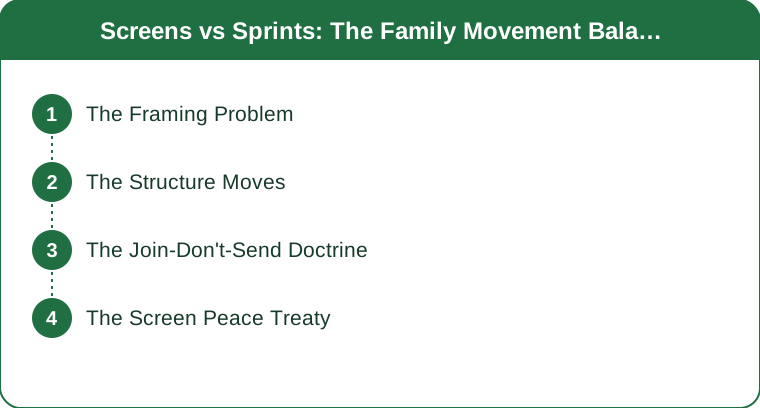
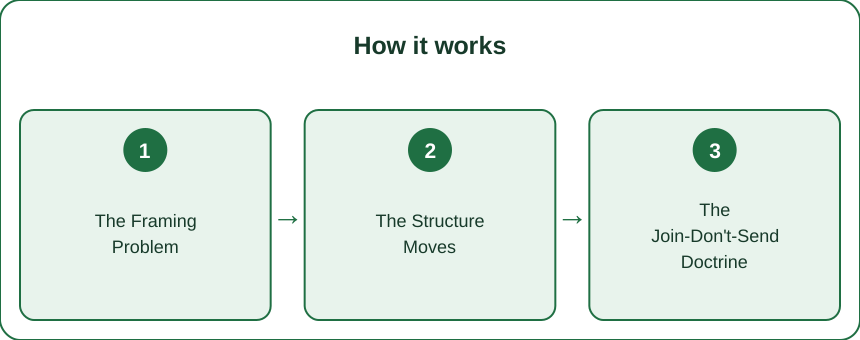
The Framing Problem
Why ‘earn your screen time’ backfires: the currency lesson (movement-as-payment teaches that activity is the chore and screens the reward — the exact value hierarchy the family didn’t mean to install; kids graduate hating the currency), the research angle (intrinsic motivation drives lifelong activity — the kids who move because it’s fun keep moving; the ones who moved for minutes stop when nobody’s counting), and the reframe (the goal is a family where movement is default and screens are one activity among many — structure changes behavior better than transactions do).
The Structure Moves
The systems that rebalance: the default-outside hour (the after-school or post-dinner block where outside is simply what happens — the routine that doesn’t negotiate daily; the evening-walk ritual with small legs attached), the screen-free zones-and-times (meals, the first hour after school, the last hour before bed — boundaries on WHERE and WHEN beat meters on how much; the digital-sunset treaty at family scale), the friction engineering (the bikes visible and aired-up, the balls by the door, the devices charging in one shared spot — the lazy-girl barrier audit applied to childhood; whichever activity is easier wins), and the boredom tolerance (the un-scheduled, un-screened hour that feels like crisis and births the fort-building — boredom is the on-ramp to self-directed play; rescuing kids from it too fast robs the mechanism).

The Join-Don’t-Send Doctrine
The multiplier nobody skips: kids move when parents move (the modeling research is unambiguous — the sent-outside child returns in minutes; the joined child stays an hour; your participation IS the intervention), the family formats (the after-dinner walk-or-ride, the weekend playground-workout where everyone trains, the ad-break challenge from the couch chapter, the yes-day hike — movement as family culture, not child management), the sport-sampling support (the seasons of trying — the kid-chosen activity sticks; the parent-chosen one expires; the driving-and-cheering is the parent’s event), and the teen adaptation (the walk-and-talk replaces the game — teens move for connection and autonomy; the side-by-side formats survive adolescence when the directive ones don’t).
The Screen Peace Treaty
Living with the devices: the screens-aren’t-evil clause (the family movie and the shared game are connection too — the treaty targets displacement, not existence; the active family with evening shows is winning), the co-viewing conversion (the dance-along and the fitness-game tier — screens that move count as movement; the VR-fitness and just-dance genre is the treaty’s neutral zone), the weather-reality wing (the winter and heat-wave weeks lean screen — the indoor-movement library and the shrunk expectations; seasons bend the balance and that’s fine), and the long-game metric (the family’s success measure isn’t today’s screen minutes — it’s whether the kids reach adulthood thinking movement is normal, fun and theirs; every joined walk deposits into exactly that account). Balance built by structure and company — no ransom notes required.
Structure over transactions, join don’t send, boredom is an on-ramp, screens aren’t the enemy. The family movement balance is culture — built at the door, on the walk, together.
Keep Reading
This article is for general informational and styling purposes only. Fit, sizing, and product availability may vary.