Family Fitness: How to Get Everyone Moving (Without Anyone Groaning)
Every parent knows the scheduling paradox: the workout you need most is the one family life makes hardest to take. The family fitness move dissolves the conflict instead of managing it — stop exercising around the kids and start moving with them. The research bonus is substantial: active parents raise active kids at dramatically higher rates (modeling beats lecturing by a mile), and childhood movement habits track into adulthood. The catch: it only works if it is actually fun. Here is the playbook.
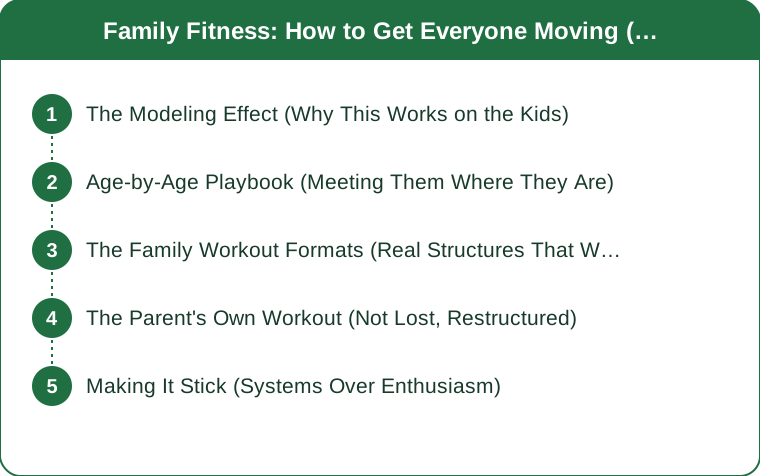
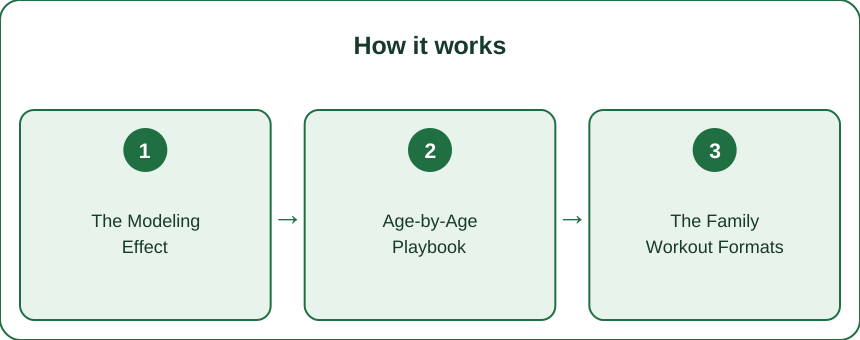
The Modeling Effect (Why This Works on the Kids)
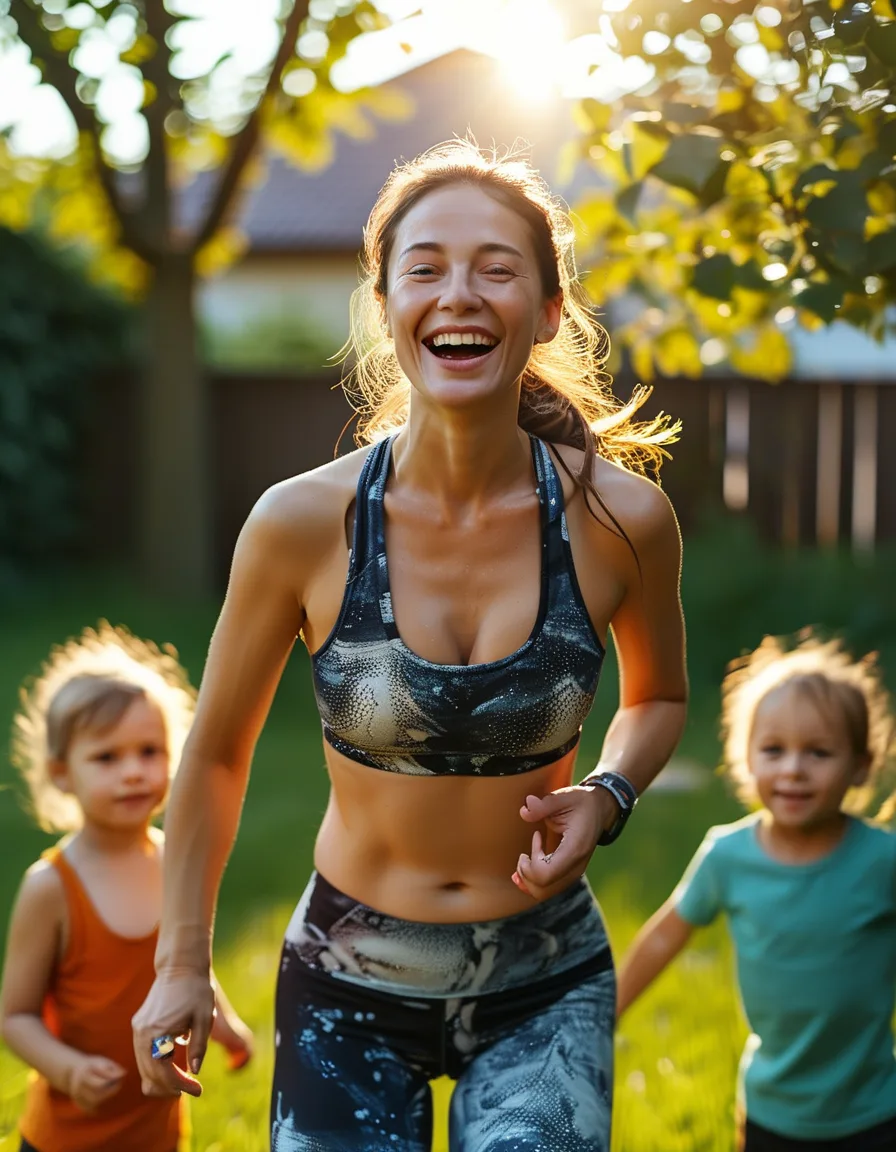
The developmental science parents should know: children of active mothers are far more likely to be active themselves — kids adopt what they observe as normal, not what they are told is important (the lecture about screens loses to the example of the Saturday hike, every time), and movement attitudes calcify early: a child who learns exercise-as-play carries a different lifelong relationship with movement than one who learns exercise-as-punishment (the do-laps-as-consequence sports culture has a lot to answer for). The reframe that governs everything below: for kids, fitness must be disguised as fun or it fails — and the delightful side effect is that disguised-as-fun works better on the adults too.
Age-by-Age Playbook (Meeting Them Where They Are)
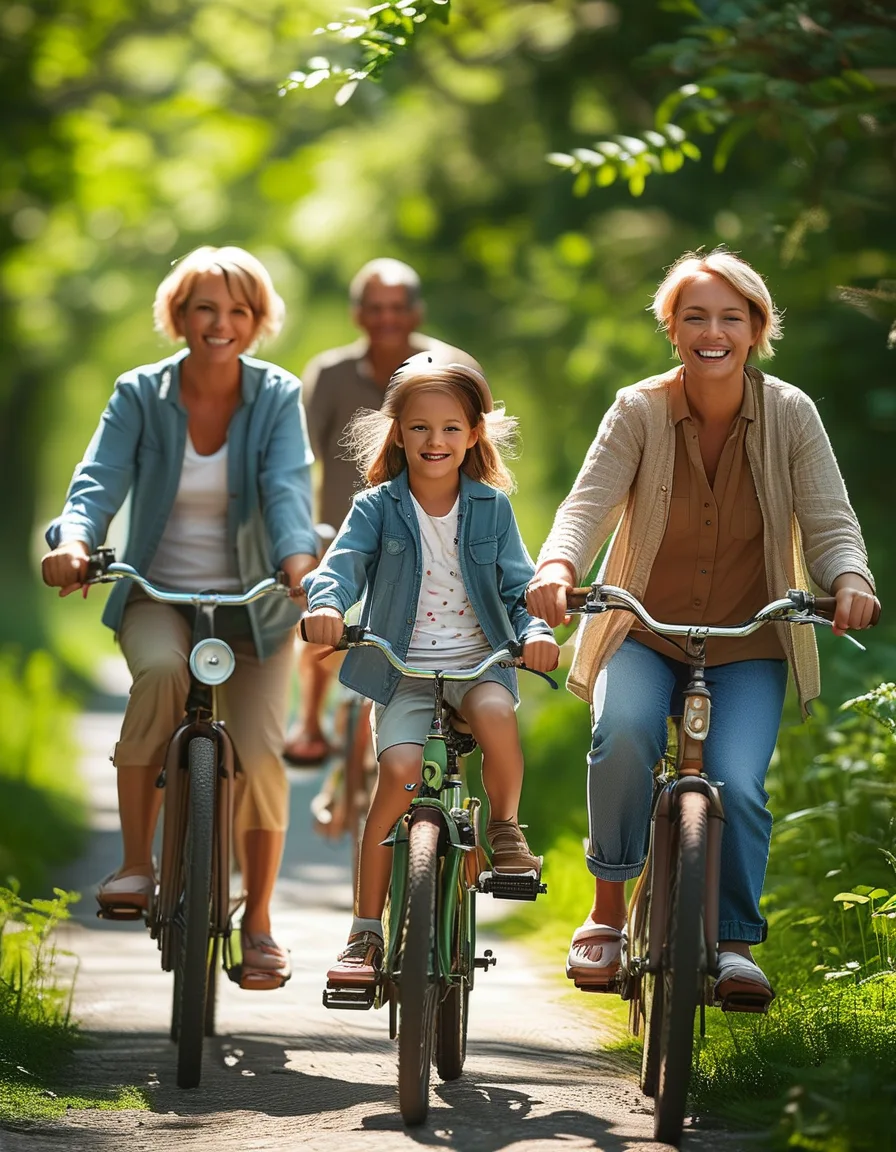
The developmental menu: toddlers and preschoolers (movement is their native language — obstacle courses from couch cushions, animal-walk races, dance parties, chase; your workout is holding a plank while a small person uses you as a bridge, which is genuinely harder), elementary age (the golden years of family fitness — bike rides, swimming, hiking with snack-based summit bribes, backyard circuits where kids design the stations, sports in the park; they still think you are fun — spend this window lavishly), and teens (the pivot to alongside rather than together — parallel gym sessions, a shared 5K goal, one-on-one walks that double as the best conversation venue teenagers permit; forced family fun dies at thirteen, but invitations with autonomy survive). The universal rule across ages: the child’s enjoyment is the program’s engine. Protect it over any fitness metric.
The Family Workout Formats (Real Structures That Work)
The proven formats: the backyard circuit (five stations — jumping jacks, bear crawls, squats, hula hoop, sprint-to-fence — 30 seconds each, kids as timekeepers and station-designers; design authority is child engagement fuel), the family walk institution (the after-dinner walk as household default — the single most sustainable format, doubling as the day’s debrief; dogs, where available, enforce attendance), weekend adventure rotation (each family member programs one weekend activity monthly — hike, pool, bike path, new playground; ownership rotates, groaning rights suspended for the owner’s pick), active chores gamified (leaf-bag races and vacuum relays — labor laundering through competition), and screen-time exchange rates where useful (active minutes banking screen minutes — controversial in theory, effective in practice for reluctant movers). Fifteen to thirty minutes, most days, counts completely. Family fitness is a volume-of-small-sessions game.
The Parent’s Own Workout (Not Lost, Restructured)
The honest reconciliation: family movement supplements but does not fully replace the parent’s own training — so restructure rather than surrender: the stroller workout era (jogging strollers exist for exactly this; park-bench circuits while babies nap in them), the practice-adjacent workout (the hour of kid’s soccer practice is a free hour — run the field’s perimeter instead of the bleachers’ group chat), the divide-and-conquer schedule with a partner (alternating morning slots protects two training lives on one family calendar), and the home workout normalized (kids interrupting your living-room session are not ruining it — they are absorbing the modeling data; the toddler doing wobbly squats next to you is the program working). The bar to hold: some training that is genuinely yours, most weeks. The family era changes the format, never the entitlement.
Making It Stick (Systems Over Enthusiasm)
The sustainability engineering: anchor to existing rhythms (after-dinner, Saturday mornings — appended to established routines, not floated on willpower), default-yes environment (bikes accessible, balls in a bin by the door, sneakers findable — friction audit the gear), the no-shame rule (missed weeks restart without ceremony; family fitness with attendance guilt becomes family avoidance), celebrate participation over performance (the kid who finished the hike slowly still finished the hike — the identity being built is we are a family that moves, not we are a family that podiums), and season adaptively (July means pools, sprinklers, dawn walks and shade — the summer-heat rules apply to small bodies even more than big ones). Play the long game: the goal is not this month’s activity minutes. It is children who, at forty, lace up sneakers without an inner argument — because home always looked like that.
Family fitness, assembled: model it rather than mandate it, meet each age where the fun lives, institutionalize the after-dinner walk, restructure (never surrender) your own training, and hold the no-shame rule through every chaotic week. The data says active parents build active kids. The fine print says it happens through ten thousand ordinary, silly, snack-bribed sessions. Start with tonight’s walk. Bring the groaners. They copy more than they admit.
Keep Reading
This article is for general informational and styling purposes only. Fit, sizing, and product availability may vary.